
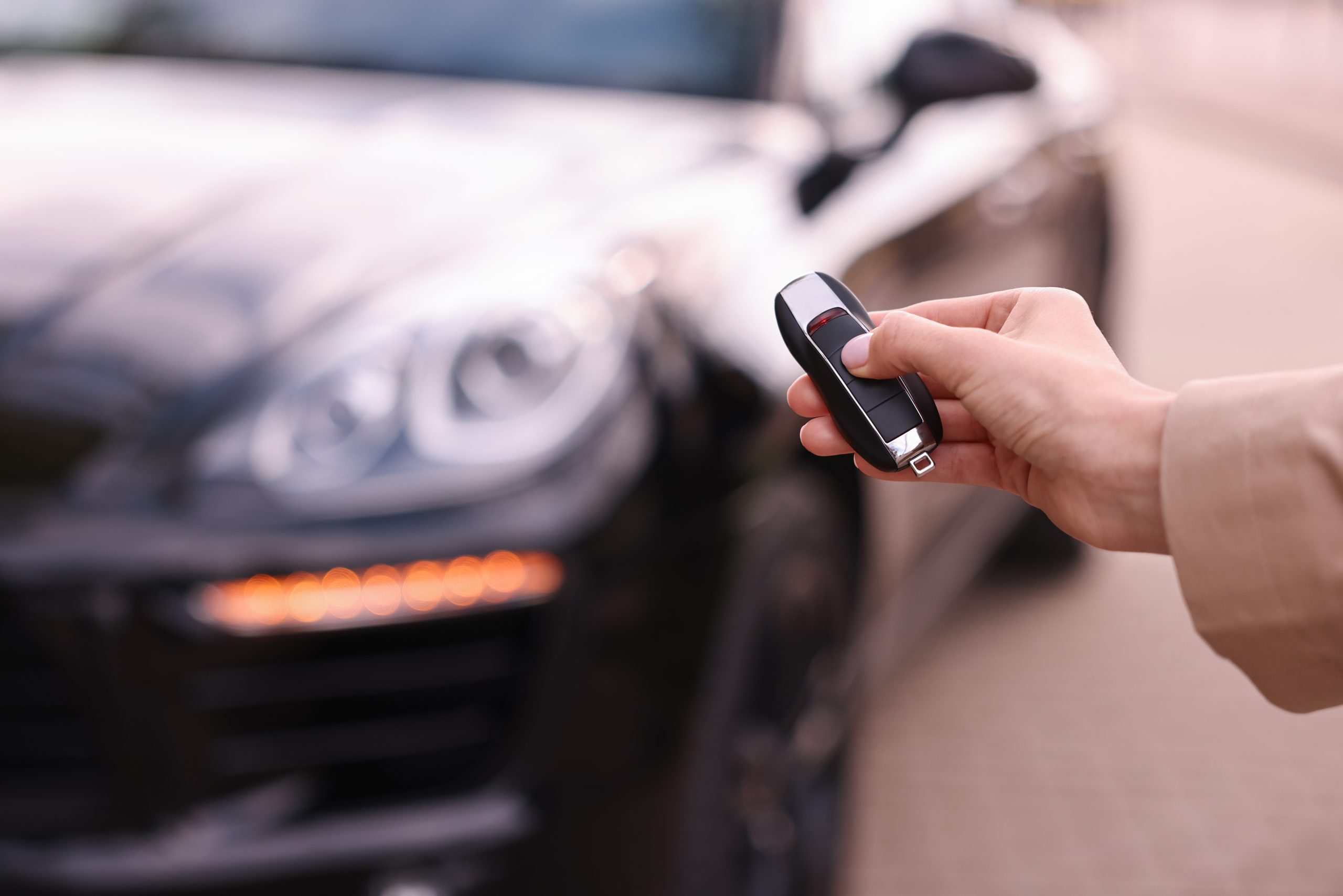
Super G&R Locksmith often meets drivers who are not sure whether they hold a transponder key, a remote key or a full smart key. The difference matters, because each type is replaced and programmed in a different way. A chipped key has a chip in the plastic head. A smart key lets you start the car without inserting anything. This guide helps you identify what you have, explains common warning signs, and shows what to expect when a key needs attention.
Transponder Key Basics: What the Chip Actually Does
This type of key looks like a normal metal key with a thick plastic head. Inside that head sits a tiny glass or ceramic chip. When you turn the key, the car sends out a weak radio signal. The chip answers with a code, and the engine only starts if the code matches.
This system is called an immobilizer. It stops a thief from starting your car with a copied blade alone. Industry estimates suggest immobilizers became common on many North American vehicles from the late 1990s onward. If your car is from that era or newer, there is a good chance your key contains a chip.
The chip needs no battery. It draws a tiny amount of power from the car’s signal, which is why a transponder key can last for years without any upkeep.
Why Cutting the Blade Is Not Enough
A hardware store can cut the metal, and the blade will usually open the door. The engine will still refuse to start, though, because the new chip has not been introduced to the car. A locksmith must program the key to the vehicle, so both the cut and the code have to match.
How to Tell a Transponder Key From a Smart Key
Many drivers use "key fob" for everything, which causes confusion. The quickest test is to look at how you start the car. The table below shows the differences in plain terms.
| Feature | Chip key | Remote key with buttons | Smart key (proximity) |
|---|---|---|---|
| Metal blade | Yes, always | Yes | Often a hidden emergency blade |
| Inserted to start | Yes | Yes | No, push-button start |
| Lock and unlock buttons | No | Yes | Yes |
| Battery inside | No | Yes, for the buttons | Yes, for the whole key |
| Typical warning sign | Car cranks but will not start | Buttons work only up close | "Key not detected" message |
If you can start the engine without the key touching anything, you almost certainly have a smart key. If you must insert and turn a blade, you have either a plain transponder key or a remote key with a chip. Check your owner’s manual if you are still unsure. For a closer look at a related fault, see our article on what causes a "key not detected" warning.
Warning Signs Your Transponder Key Is Failing
A chip rarely dies without notice. Most keys give small hints first. Spotting them early can save you from being stranded in a parking lot in January.
- The engine cranks but does not start, and a key or lock symbol flashes on the dashboard.
- The car starts only on the second or third try.
- The key works only when held in a certain position.
- The plastic head is cracked, or the chip rattles inside.
- The spare key starts the car, but the main key does not.
That last point is useful. If the spare works, the car and its immobilizer are fine, and the problem sits with the main key. A cracked head or hard drop is the usual culprit. Avoid hanging heavy items on the ring, since weight and vibration slowly stress the plastic around the chip.
Quick Checks Before You Call
Try these simple steps first. They take two minutes and sometimes solve the problem.
1. Use your spare key and note whether it starts the car.
2. Remove other keys and fobs from the ring, since signals can interfere.
3. Check the dashboard for a security light and write down what it shows.
4. Inspect the key head for cracks or loose parts.
5. Try the key in the door lock to see if the blade still turns freely.
Replacement Options for Each Key Type
What happens next depends on your key type and how many working keys remain. If you still have one working key, the process is usually simpler, because the car can learn a new key from an existing one. If every key is lost, the locksmith may need to connect to the car’s computer to add a new key. That is called an "all keys lost" situation, and it takes longer.
Our mobile technicians come to you, which matters when the car cannot move. You can read more about the full process in our guide to car key replacement and what happens when you need a new one.
What to Have Ready
Having details ready speeds up the visit. Collect the following before the technician arrives.
- Your vehicle’s make, model and year
- Proof of ownership, such as registration
- Your photo identification
- Any working keys, even if they are worn
- The vehicle identification number (VIN), found on the dashboard or door jamb
Proof of ownership protects you. A responsible locksmith will always ask for it before creating a new key, since the same skills could be misused. That step is normal and not an inconvenience.
Protecting Your Vehicle and Your Keys
Your key is part of your car’s security, so treat it that way. Keep a spare at home, away from the car. Never leave a key in a hidden spot on the vehicle, because thieves know the usual places. The Insurance Bureau of Canada shares practical tips on vehicle theft prevention that apply to any key type.
Cold weather adds one more risk. Calgary winters can make plastic brittle, and a key dropped on frozen pavement is more likely to crack. Keeping the key in an inner pocket rather than an outer one reduces that risk. If your key head already looks damaged, replace it before it fails completely.
Also review our overview of automotive locksmith services if you want to see what else we handle on the road. When the time comes, we will assess your situation and give an honest quote before any work starts.
Frequently Asked Questions
How do I know what kind of car key I have?
Look for a thick plastic head and check the model year. Most keys on vehicles from the late 1990s onward carry a chip. If you must insert the key to start the car, it is probably a chipped key or a remote key.
Can a new chip key be programmed without the original?
In many cases, yes. A locksmith can often program a new key using the car’s computer, even if every key is lost. The process takes longer than copying from a working key, and some makes have extra steps.
Will a dead battery stop my chip key from working?
A plain chip has no battery, so it keeps working. A remote key’s buttons may fail with a weak battery, but the chip inside can still start the car. A smart key is different, since it needs power to be detected.
Why does my car start, then stall right away?
That can happen when the immobilizer rejects the key code after starting. A faulty chip or an unprogrammed copy is a common cause. Have the key tested to confirm.
Can I program a key myself?
Some vehicles allow self-programming with a working key and a set sequence. Many do not. Using the wrong method can lock the system, so ask a professional if you are unsure.
Contact Super G&R Locksmith
If your key is acting up, call us any time on (403) 870-4095. We are open 24/7 and our office is at #101 2750 3 Ave NE, Calgary, AB T2A 2L5.